So many of us fall in and out of exercise routines on a regular basis. For many, it's a daily psychological battle whether to go to the gym or skip it altogether.
But once you do achieve your fitness goals and get to what you consider to be "in shape," what happens if you start slacking? How long does it take for negative results to start creeping in.
The answer: much sooner than you think.
We spoke recently to Shawn Arent, an exercise scientist at Rutgers University, and asked him to tell us how long it actually takes to get out of shape.
Here's what he told us:
Showing posts with label Fitness. Show all posts
Flush out fat and toxins from your body
Apple cider vinegar has an array of health benefits. If you have diabetes and want to lose weight and lower your blood sugars, apple cider vinegar can assist you with these goals. Since apples contain vitamin C, flavonoids, malic acid, fiber, magnesium, potassium, calcium, iron, and phosphorus they have a cleansing effect on the body.
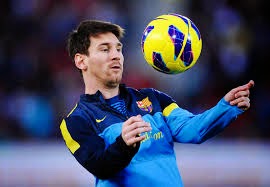
Lionel Messi: Diet plan for football player
Lionel Messi is a professional footballer and belongs to Argentina. He plays for the national team of Argentina as the captain and the soccer club Barcelona. He holds various titles and records to his name and has achieved huge name in the sport. He has been associated with the sport from the age of 5 and has never looked back. At a very young age he has become a popular name around the globe. He is a health acquainted person and follows a different kind of workout routine and diet plan.
Daily exercise made easy
When you decide you want to start losing weight it is important to choose both a diet and an exercise plan that you can fit easily into your life with minimal fuss. The Dukan diet is a great example of a diet that does this and do it yourself at home exercise is the cheapest and easiest way to ensure you exercise regularly.
The thought of having to get up and go out to the gym is sometimes enough to put people off exercising so if exercising at a gym is not your style then plan a week’s worth of exercise that you can easily incorporate into your life. Chores around the house will count as cardiovascular exercise, an hour of moderate household tasks can burn up to 170 calories, just 15 minutes of vacuuming can burn up to 43 calories and 15 minutes washing dishes can burn up to 22 calories. If you have a garden you can burn up to 102 calories watering plants or washing your car. Playing with animals and children is another all fun way you can burn calories during your everyday life without having to schedule in a gym visit or pay for expensive equipment.
If you want to take the exercise a step further you can dedicate some time each day to doing simple aerobic style exercises that can be done in the house. Lunges, star jumps, press ups and sit ups can all be done easily, as can squats and chair sits. You can use tinned foods or bottles of water as weights so you can tone and strengthen you arms. If you need more inspiration to exercise then you can always purchase a fitness DVD and dedicate just half an hour a day to doing it in your living room, without having to step out of the front door.
It’s important to eat well to fuel your exercise and get the most from your workout. The Dukan diet is a great option for those looking to lose weight or tone up thanks to the list of unlimited 100 foods which are ‘free’, meaning you can indulge in them as often as you want. If you are hungry after a work out you can snack on meats, chicken or seafood. You can use your free vegetables to make a free chicken salad or go online to the Dukan coaching pages for recipe ideas and inspiration. As the pages are regularly updated and offer a wealth of information you need never feel unmotivated or alone on the diet. By eating little and often you will ensure you are never hungry and have the energy to exercise and continue losing weight. You will be surprised at how easy you find to incorporate it into your life.
D-Ribose Increases Energy in Heart Tissues Dramatically
The thought of having to get up and go out to the gym is sometimes enough to put people off exercising so if exercising at a gym is not your style then plan a week’s worth of exercise that you can easily incorporate into your life. Chores around the house will count as cardiovascular exercise, an hour of moderate household tasks can burn up to 170 calories, just 15 minutes of vacuuming can burn up to 43 calories and 15 minutes washing dishes can burn up to 22 calories. If you have a garden you can burn up to 102 calories watering plants or washing your car. Playing with animals and children is another all fun way you can burn calories during your everyday life without having to schedule in a gym visit or pay for expensive equipment.
D-Ribose Increases Energy in Heart Tissues Dramatically
Isometric Exercises are Most Effective for Lowering Blood Pressure
Doctors Health Press, a division of Lombardi Publishing Corporation and publisher of various natural health newsletters, books, and reports, including the popular online Doctors Health Press e-Bulletin, is reporting on a new study finding that isometric resistance training is the most effective exercise to keep blood pressure down.As Doctors Health Press e-Bulletin (http://www.doctorshealthpress.com/heart-health-articles/blood-pressure-articles/the-best-exercise-for-lowering-blood-pressure) notes, isometric resistance training involves muscular actions in which the length of the muscles doesn't actually change; in other words, a person won't see their muscles moving or stretching. All the force they apply against their muscles is done in a static way. The muscles are tense, but they don't actually contract like they would when a person lifts a heavy barbell.
As the article "The Best Exercise for Lowering Blood Pressure" reports, when Belgian researchers compared isometric resistance training with other types of resistance training, they found that this form triggered the greatest drop in systolic blood pressure.
The Doctors Health Press e-Bulletin article states that isometric resistance exercises have other benefits going for them besides lowering blood pressure. High-tech equipment, which can be very pricey, and an expensive gym membership aren't needed for isometric resistance. The exercises also tend to be fairly safe to perform compared to other types of resistance training, as they don't have a history of causing injuries.
source: fitness.broadwayworld
Reflexology alleviate muscle tension and stress
Mild Exercise After Meals Can Help Improve Your Heart Health
We know that eating well and staying active keep you healthy, but are still in the process of discovering the best times to eat and exercise. Through a study by the American College of Sports Medicine, it turns out light exercise after a meal can help improve your heart health. Here's why:
"High triglyceride levels can put individuals at risk for cardiovascular disease, heart attack, and other heart-related conditions. Regular exercise is a good way to keep triglycerides from becoming elevated, and the results of this study may help individuals manage their triglyceride levels more effectively by considering the timing," said the primary investigator, Wataru Aoi, Ph.D., of Kyoto Prefectural University in Kyoto, Japan.
In a small sample of healthy participants who were not currently participating in an exercise program, a low-intensity exercise combination of walking and light resistance exercises suppressed the elevation of post-meal triglyceride concentration after eating a high-fat meal. This effect was noted in VLDL, LDL, and HDL fractions.
These findings seem to conflict with the more commonly-held belief that exercise before eating is better as it boosts your metabolism and aids in better digestion, but the two don't necessarily contradict one another. Whether you exercise before or not, it looks like you'll do yourself a favor by moving around post-meal. After all, it makes sense. When your body is working to digest food, lying around probably isn't going to help.
Source: ACSM Press Newsletter.
Weight Lifting Benefits Heart Health: Study
Researchers from the College of Applied Health Sciences at the University of Illinois at Chicago (UIC) have announced the results of a study indicating the advantages of resistance training in relationship to positive cardiovascular effects.
The study’s findings demonstrates that after just 6 weeks of resistance training and exercise, 2 vital bio-markers associated with negative outcomes relating to vascular tissue damage had disappeared for African American men.
The study’s results did not show the same effects for Caucasian men.
These bio-markers, key indicators for inflammation, immune response and the shaping of vascular tissue generally rise in conjunction with tissue damage, infection and stress.
The bio-markers discovered to decrease after the resistance training are known as C-reactive proteins.
“This suggests that resistance exercise training is more beneficial in young African American men then in [white] men of the same age,” said Bo Fernhall, dean of the College of Applied Health Sciences at the University of Illinois at Chicago (UIC).
“Higher blood pressures in African American children have been shown asyoung as 8 to 10 years of age,” said Dr. Fernhall. “so there’s obviously something going on that predisposes the African American population to end stage disease, hypertension and stroke and the more debilitating diseases later on in life.”
Cardiovascular disease, hypertension, stroke and kidney disease is more widespread among blacks than whites in the United States.
Levels of these C-reactive proteins bio-markers, one involving vascular re-modeling and the other that signals oxidative stress, dropped significantly among African American men that lifted weights. Study co-author Marc Cook, a UIC doctoral student pointed out that this study builds on a previous study that shows that aerobic exercise also helps to lower levels of the C-reactive protein bio-markers for oxidative stress.
“If you don’t like cardiovascular exercise, if you don’t like running on a treadmill, if you can’t play basketball or you’re not good at it, you can lift weights and improve your health, especially when it comes to high blood pressure,” Cook said. “If you want to lift weights and you do it on a regular basis, you could improve your function.
Lead study author, Dr. Bo Fernhall, is a professor in the department of kinesiology and community health at UIC’s Urbana-Champaign campus.
The study findings were published online in the Journal of Human Hypertension.
Article by Jim Donahue
Reflexology alleviate muscle tension and stress
Your Secret Energy Source: Find & Use It
Are you tired all the time? Do you feel as if someone has tied a concrete block to your behind, forcing you to drag it around all day? There is a way to untie this proverbial brick--tap into your secret energy source. Everyone has it; in fact you have more than one. It is a matter of knowing what these sources are and putting them to work for you.
1. Over-the-Counter Sources
Oh the number of energy boosters on the market. Have you ever tried any of them? Have you ever been tempted to use any of them? Tsk, tsk. Most of these come in the form of processed caffeine, stimulants and sodium. Interestingly enough, though, they contain the same fats and proteins your body produces. Rather than taking synthetic energy boosting products that may cause harmful side effects, you can make natural changes and reap greater benefits.
2. Eat
Let's get one thing straight. You need calories. Your body needs calories. They are the fuel you require for energy. When you eat, your body processes the nutrients from the food, converting them into energy. You must eat healthy, though. Determine how many calories you need each day, then get them from lean proteins, whole grains, lots of veggies and fruits.
3. Exercise
Your metabolism is another secret energy source in your body. It is responsible for the number of calories and fat you burn, but also controls your level of fatigue; the slower your metabolism, the more tired you are. The answer? Exercise! Walk for 30 minutes, ride a bike, dance, clean your house...anything that increases your heart rate.
4. Breathe
Yes, breathing is very basic. You do it without thinking. However, you need to take time through the day and breathe deeply. This increases the amount of oxygen your body delivers to your cells, and helps transport the nutrients from the foods you eat to these cells as well. An increase in oxygen means an increase in energy. Breathe deeply as many times through the day as possible.
5. Drink Water
If you opt for juices, soft drinks or coffee instead of water, you could be dehydrated. "What? Dehydrated? But I drink all this liquid during the day!" If this is what you are thinking, you are wrong. Liquid is liquid, but it does not replace the benefits of water. These other drinks contain sugar, a leading cause of dehydration. Additionally, water comprises 90 percent of your body. If you do not replace what you lose each day (e.g. urination, sweat) dehydration occurs. This results in fatigue. Always keep water with you no matter where you go. Drink at least 64 ounces each day.
6. Rest
You absolutely must get enough rest if you want more energy. Everyone, regardless of what they say, needs 7 to 8 hours of sleep each night. For optimal results, get yourself into a routine. Go to bed at the same time each night and wake up at the same time every morning. You will soon see an increase in your energy levels.
Energy in not just a word to throw around. You need it to complete everyday tasks and to get through the day. Your secret energy source is not really a secret. It is right before your eyes. All you have to do is commit to making the changes this secret requires.
D-Ribose Increases Energy in Heart Tissues Dramatically
Reflexology alleviate muscle tension and stress
New workout vogue: Trim fat, enlarge brain
If you leapt out of bed today bubbling with resolve to greet the new year with a rigorous fitness routine, get ready for a bonus.
Research has long established what exercise can do for heart and muscle development. Now, according to an expanding body of research, it could also be growing your brain.
The results of several new studies indicate that physical activity may make you better at learning and memory tasks. And in a hopeful sign for America's aging population, it is thought to be a factor in warding off dementia.
"What we now know pretty well is that animals who exercise have greater levels of chemicals in the brain that promote brain growth," said Owen Carmichael, associate professor in the neurology department at UC Davis Medical Center. "These neuro-growth factors are what tell the brain to grow new cells."
In particular, Carmichael points to research on rats showing that of two groups – one kept from exercising and the other exercised vigorously – the "active rats were gunning to go," mentally. The inactive rats showed an "inhibited ability to form new neurons; they didn't remember as well" as the active rats.
Fast-forward from rodent research to anthropology and you come across a set of human evolution studies that suggest the human brain grew because of robust physical activity.
David A. Raichlen, an anthropologist at the University of Arizona, is the primary author of at least two new papers exploring the thesis. Collaborating with colleagues in 2011, Raichlen published online his examination called "Relationships Between Exercise Capacity and Brain Size in Mammals."
This and other research say that aerobic exercise stimulates myriad brain-growth factors, including blood and an insulin-like substance "which appear to lead to exercise-induced neurogenesis in the rodent and human hippocampus."
This may be how human brains developed, proportionately, to three times the size of those in other mammals, experts say.
"Being sedentary was not really an option in the days when you had to chase your dinner," Carmichael said.
In addition, a 2011 paper in the EPMA Journal, a European science publication, offers hope to those recovering from brain injuries or concerned about dementia. Citing animal studies, the paper's authors said exercise may help in the creation of growth cells that surround injured brain tissue, and in the hippocampus.
The brain's hippocampus is ground zero for memory tasks, and atrophy as a result of advanced aging is a risk factor in Alzheimer's.
But according to the paper, "data indicate that exercise may alleviate disease progression in Alzheimer's disease, as well as in other neurodegenerative conditions like Parkinson's disease."
The European paper recommends further human study using tools such as magnetic resonance imaging and PET scans to measure brain size after activity.
Ted Smith is co-owner with his wife, Chaz Smith, of the Hangtown Fencing Club in Placerville, and has been fencing for 22 years. At 60, he has twice been the U.S. national champion in the 40-and-up divisions and regularly places in the nation's top four fencers in his age group.
Smith doesn't need studies to reinforce what he has observed among colleagues in the highly competitive international fencing field.
"People I know who compete in my age division are very athletic," Smith said. "A lot of these guys are amazingly energized at 60 and older. They are constantly mentally adjusting to the changes their opponents make every second. They are adjusting their own strategies instantly."
Besides providing challenging brain work, physical activity also trains the brain so that "your balance improves and your flexibility improves," said Smith, who coaches about 20 young fencers. "Your chances of slipping and falling are far less."
In a recent Public Broadcasting Service discussion of a book he co-authored called "Super Brain," Harvard professor of neurology Rudy Tanzi captivates television audience members with tales of the human brain's prowess.
Then, without explanation, he asks the studio audience to rise and run in place for several seconds. They do so, looking bemused and befuddled. When Tanzi stops them, he explains the purpose of the drill: They've just fed their brains.
Researchers say even the smallest amount of aerobic activity helps. But benefits to the brain are greater if you run rather than jog, jog rather than walk, walk briskly rather than stroll. This is because the more rigorous the activity, the greater the blood supply and insulin-like flow to the brain.
Evette Tsang, 43, of Sacramento is a four-year breast cancer survivor who embraces exercise as a means of living healthy. Tsang was not aware of the latest research but already was leading an effort of several wellness groups to make joint New Year's resolutions in 2013 to step up aerobic physical activity.
"Definitely, when I exercise, it clears the mind and makes me feel better," Tsang said.
Or, in the lexicon of science, as expressed in a Trends in Neuroscience abstract in 2007: "Human and other animal studies demonstrate that exercise targets many aspects of brain function and has broad effects on overall brain health."
source: sacbee
Fitness Secrets: Build The Body Of Your Dreams
Fitness Secrets: Build The Body Of Your Dreams By Following These 4 Fitness Tips
As many of you are probably aware, the number of individuals in the world who are currently overweight is at an all time high. High fat foods, sugary drinks, and a lack of activity are the main culprits for these peoples' weight gains. And if you feel as if you could stand to lose a few pounds, then these 4, fat burning fitness tips could be exactly what you are looking for.
We all know how challenging it can be to get yourself fit and healthy and lose weight, especially if you lead a hectic lifestyle and wish that there were simply more hours in the day. Never fear though, because no matter how strapped for time you may be, if you follow some of the following fitness secrets and techniques, and incorporate them into your everyday life, you'll soon notice the pounds literally melting away.
1. Get your nutrition in check - When it comes to leading a healthy lifestyle and losing weight, getting your diet in order and eating healthy and nutritious foods is simply a must. Without a shadow of a doubt, the two most important aspects of health and fitness are diet and exercise. If your diet is wrong, the pounds will just keep piling on. Avoid saturated fats and processed foods packed full of artificial ingredients, and instead go for healthy, fresh, natural, low fat alternatives. Fresh fruits and vegetables, lean meats and fish, potatoes, pasta etc, are all low fat foods that can taste delicious and still help you to not only lose weight, but protect yourself from various diseases and health risks. As well as this, try to drink plenty of water during the day as well. This has been known to boost your metabolism, and also flush harmful toxins out of your body.
2. Keep a log of everything - When we say everything, we mean everything. Writing down exactly what you eat and drink in a day, as well as what exercise you have done, can prove to be vitally important. Keeping note of everything ensures that nothing is left to chance or wonder. If your weight loss stalls one week, or you even gain a pound or two, you can go back to your notes and look at exactly what you have done. Did you eat anything different to what you normally do? Did you miss a workout or cut one short? Having the evidence written down for you ensures that you do not make the same mistakes again. As humans, that is after all how we learn, from our mistakes.
3. Mix up your workouts - Obviously when it comes to fitness, exercise is simply a must. But doing the same monotonous workout in the gym, day in and day out, soon proves to get boring. And that is when most people tend to quit. They don't look forward to their workouts, and simply cannot be bothered. Instead try to mix things up. If you usually start with an hour on the treadmill, why not do some boxing or bag work instead? If you usually go for a run, how about swimming or other sports? Keeping things fresh, interesting, and fun, ensures that you won't get bored and quit altogether, which is the last thing that anybody wants.
4. Don't do it alone - Studies have shown that people that take part in fitness and exercise regimes, have much higher success rates when they do so with a friend or family member. Having somebody with you every step of the way, ensures that you both have the same goals in mind, makes your workouts more enjoyable and productive, and provides encouragement for you both when you need it most. As well as this, it can also help to strengthen the relationship between you, as you both have a common goal in mind.
Remember, health and fitness can both go hand in hand with happiness. Being fit and healthy ensures that you look and feel great, both on the inside and out. Be under no illusions, getting fit, healthy and in shape is not an easy fix and will not happen overnight, but if you are prepared to put the work in, you will soon be reaping the rewards.
Good luck with all your future health and fitness goals, and until next time.
Thanks for reading.
"Oh Anyway"... How about if I told you there is actually 1 secret trick here? Are you going to listen to me? Nice!! If you are really committed then you must take a look at The Best Cheat Ever, Now!!
Correct Your Shoulders With Butterfly Exercise
Butterfly Exercise on Multi Gym
Multi-gymnasium are available with various types of specific apparatuses. Butterfly exercise apparatus is one of the stations of multi-gym. This exercise is also very effective to correct rounded shoulders/ drooped shoulders. This exercise develops the deltoid, pectoralis, triceps brachii, supraspinatus, teres minor and lattisimus dorsi. This exercise not only develops the shoulders but also develop the back muscles and abdomen muscles. At the same time this exercise is safe as it is done on fixed apparatus and does not need external help. To do this exercise proceeds as explained below:
Sit down on the seat of butterfly apparatus. Keep the spine straight. Look your face in the front mirror and fix the eye at head height. Fix the initial weight as per your physical efficiency. Recommended weight is less than 10kg. Because these exercises here are explained especially for postural corrections and not for body building. Hold the handles properly and with both the arms with the cushioned pads provided for the purpose. Take a breath and press both the arms and hands medially till both the ends of the apparatus touch each other.
De-breath and loosen the apparatus apart. Repeat the process for 10-12 times. Take 3-4 minutes recovery. Do one more set of 8-10 repetitions as explained above. Again take 4-5 minutes reckoned and increase the weight. Do one more set of 6-8 repetitions as explained above. At last decrease the weight to initial level and do one set of 10-12 repetitions.
Apart from the above physical exercises many yoga postures are there which may play an important role to correct this deformity. Main yoga postures for the purpose are given below for the benefit of the reader:
(a) Weigh Posture
(b) Camel Posture
(c) Anterior Stretch Posture
(d) Heron Posture
(e)Wheel Posture
(f) Crocodile Posture
(g) Peacock Posture (h) Scorpion Posture
Multi-gymnasium are available with various types of specific apparatuses. Butterfly exercise apparatus is one of the stations of multi-gym. This exercise is also very effective to correct rounded shoulders/ drooped shoulders. This exercise develops the deltoid, pectoralis, triceps brachii, supraspinatus, teres minor and lattisimus dorsi. This exercise not only develops the shoulders but also develop the back muscles and abdomen muscles. At the same time this exercise is safe as it is done on fixed apparatus and does not need external help. To do this exercise proceeds as explained below:
Sit down on the seat of butterfly apparatus. Keep the spine straight. Look your face in the front mirror and fix the eye at head height. Fix the initial weight as per your physical efficiency. Recommended weight is less than 10kg. Because these exercises here are explained especially for postural corrections and not for body building. Hold the handles properly and with both the arms with the cushioned pads provided for the purpose. Take a breath and press both the arms and hands medially till both the ends of the apparatus touch each other.
De-breath and loosen the apparatus apart. Repeat the process for 10-12 times. Take 3-4 minutes recovery. Do one more set of 8-10 repetitions as explained above. Again take 4-5 minutes reckoned and increase the weight. Do one more set of 6-8 repetitions as explained above. At last decrease the weight to initial level and do one set of 10-12 repetitions.
Apart from the above physical exercises many yoga postures are there which may play an important role to correct this deformity. Main yoga postures for the purpose are given below for the benefit of the reader:
(a) Weigh Posture
(b) Camel Posture
(c) Anterior Stretch Posture
(d) Heron Posture
(e)Wheel Posture
(f) Crocodile Posture
(g) Peacock Posture (h) Scorpion Posture
Fitness Weapons & Supplements Facts
This article is in continuation of Fitness Gears and Dietary Supplements
Briefs
Briefs or knickers are the under garment worn by men. This under garment supports the organs of excretion and reproduction. This under garment should be fit enough to support the penis and testicles tightly but comfortably and large enough to cover all the gluteus muscles (Butts) properly. The regular use of loose brief may result in hydrocils. During fitness workouts these parts need to be kept tight enough. The upper band (Elastic) of the brief should not exert much pressure on the abdomen muscles and this upper band should not be too narrow. The upper band with the width of more than two inches must be avoided as it will certainly exert undue pressure on the abdomen. The stuff should be made of pure cotton which gives a cooling effect to the skin so the briefs made of nylon or mixture of nylon should be avoided. Stuff of the brief should be skin friendly.
Panties
Panties is an under garment worn by women. Regular use of Nylon made panties result in white vaginal discharge (Leucorrhoea) because nylon in constant touch with body will generate heat. This heat gives itching sensation and also gets radiated internally which results in leucorrhoea. Gluteus muscles (butts) of women are surrounded by fatty cells. Due to this the butts seem enlarged. Panties should cover the entire area of butts and the lower bend of the panties should not last on the butts.
Upper band (strip/elastic) of the panties should not exert undue pressure on the abdomen .and at the same time should work as a belt to check the size of the tummy. The fabric of the panties must be skin friendly. The lower bends should not restrict the movement of lower limbs (legs).
Vest
Vest is the upper under garment worn by men. This under garment surrounds chest, abdomen, back & shoulders. This garment (vest) should neither be too loose or tight. It should not restrict the movement of upper limbs (arms). Vest should be tight enough to support and keep the bulk of pectoralis major muscles (chest muscles) at their proper place and loose enough to allow the suspension of rib cage on every breath. The upper most strip of the vest should not be wider otherwise it will disturb the arm movement. Vest should not cover the armpits so that evaporation can take place naturally. Vest should not be made of nylon or acrylic stuff which may cause skin diseases due to wetness and sweat. The fibre of the vest should absorb the sweat. as much as possible. Vest stuff should be such which does not produce heat on body touch which may cause heart problems.
Bra
Bra is the upper under garment worn by women. This under garment surrounds the upper back, upper abdomen and breast. Like vest this garment should be tight enough to support the breasts at their place and loose enough so that it does not press them unnecessarily. Also it should allow the suspension of rib cage on every breath. Upper most strips of the bra should not be wider so that it does not restrict arm movement. Bra should not be made of nylon or acrylic stuff which may cause skin problems. Bra should not contain cushioned pads inside. Sewing lines should not be in the inner most layers. Lower most strip of the bra should be little wider so that it covers whole of rib cage and the ribs do not remain visible.
HAIR BAND/HEAD BAND/CAPS/WRIST BAND/ TOWEL
If the hair is long then these need to be tied so that there is no obstruction during fitness workouts. Hair band must be tied to keep the hair intact and avoid the dust particles entering them. After tying the hair with hair band, some hair still comes on the face because only long hair can be controlled with hair band. Head band becomes necessary during work outs for women and girls. Head band should not be too tight that it results in the headache or stops die blood circulation to the head. It should not be too loose that comes down frequently. And disturb the work outs. Colour of the hair band and head band should be soothing to the eyes of onlookers as well as match the attire and occasion.
Wearing of sports cap is a must for outdoor work outs. Caps stop the excess heat of the sun rays to be absorbed by the hair and radiated to the head. It also helps to protect the eyes from too much or excessive sunlight. It works like a shield for the eyes. It is a must during swimming type work out but swimming caps are different from the sports caps. Caps must not be too heavy and must be provided with adjustable strip so that it can be loosened or tightened as per the need.
Wrist bands are optional but not bad if used. Wrist bands solve the purpose of sweat wiping only but excessive sweat can not be wiped out with the wrist bands so workout towel is a must. Workout towel not only helps to wipe out the sweat from the face but it also helps to wipe out the sweat from the entire body. So in place of wrist bands towels should be preferred.
TRACK SUITS/LOWERS/SHORTS/SKIN TIGHTS
Pants, track suits, lowers, shorts and skin tights are the gears which are worn by both men and women in lower limbs (legs). Lower limbs are the organs of locomotion. Lower limbs constitute 34.5 of the total body weight which is nearly l/3rd of the total and always support and bear two thirds of body weight which is nearly 65.5 percent of the total weight. So it is in the case of bones. Out of total 206 bones of the human body 64 bones constitute the lower limbs. Which make nearly one diird of the total bones. The main function of the legs is movement. The clothing of the lower limbs should be such which brings minimum air resistance in movement. Air resistance depends upon the size, shape, spin and velocity of the moving objects. Minimum is the air resistance, maximum will be the speed.
Loose clothes generally resist the air so the clothing of the legs should be tight enough so that no part of it flickers in the air and obstruct its path. This will slow down the body and make the movement slow. Now a day's most of the fitness workouts are being resumed in the gyms on the machines. Loose clothing may prove to be dangerous so as far as possible skin tight gears for legs should be selected. During summer even shorts will serve the purpose of fitness workout to beat the heat but during winter season lower of track pant should be preferred. As far as possible cotton clothe should be preferred. Lower or track suits should be up to ankle length and should not end on calf rustles as it may hamper the functioning of calf muscle.
Lower most strip of the track suit or track lower should not be too tight.
Upper most strip of the pant/track suit or lower should be at least 2 inches wide so that it does not press the lower abdomen. Colour of the clothes should be soothing to the eyes. Eyes. Various shades of blue colour are mostly preferred through out the world as the blue colour is considered to bring the peace and calm effect it also brings cold sensation whereas the red colour gives a hot or burning sensation. As far as blue colour is concerned it is very beneficial for the skin. In naturopathy blue colour is recommended for skin troubles. Blue colour also calms down the anger and checks aggressiveness. So any shade of blue colour should be chosen for the shorts/pants/lower etc. by both men and women.
SHIRTS/T-SHIRTS/TRACK UPPER
Shirts/T-Shirts or track uppers are wore by both men and women. It is not mandatory during the hot summers but during winter this attire becomes a necessity. The sole purpose or the upper attire is to keep the body warm so that muscles do not cool down at once. Cold muscles seldom respond. Upper dress should also follow the rule of aero dynamics. Upper clothing should neither be too loose to increase the air resistance nor too tight that it makes the breathing and chest expansion difficult. Upper clothing should not be too long that it comes up to the butts. Fitness workout gears are not meant for the party or social gathering after all. This attire need to give maximum comfort and at the same time allow the body to move in any direction freely. Upper clothing should preferably be collarless with round neck, v-neck and also button less.
High round neck collar should be used during chilled winters but this high neck collar must have some zip so that it can be lowered down alter warm up. .Fabric or the upper should be skin friendly and colour should also match the occasion. Now a days branded companies are manufacturing fitness gears at mass scale and provide a range of variety for the customers to select from. This chapter has been written to help the readers for the sake of handy knowledge of sports gears. Good attire always creates a zeal for the fitness workout. Sports gears are the tools which help the person to mend the bodily machine. Proper tool makes the job easier.
DIETARY SUPPLEMENTS
All the constituents of diet along with their function, sources, requirement and draw backs of excess consumption have been already discussed in the previous chapter named 'Fitness, Diet and Nutrition'. So instead of explaining them here let's go directly on to the fitness trends from the dietary supplements point of view. Most of the gymnasiums throughout the world today advise their trainees (customers) to take one supplement or the other in order to build muscles, burn fat and to get Instant energy. They propagate this viewpoint in the method of short cut. Though this book is basically written for the gym-going person, will be asked to switch over to these supplements. So energy aspect related to fitness dietary supplements is being explained here in detail to benefit the readers. After proper knowledge of fitness diet and nutrition, dietary supplements may appear to be useless to the person. Readers can decide for themselves if they are in need of supplements or not.
Muscle Builders
Fitness market is full of the supplements of this group. Most of these supplements come in powder form but some companies have introduced these supplements in liquid form. It is evident from the chapter on diet and nutrition that proteins are the only muscle builders or building blocks. There is no reservoir of proteins in the human body for future use. Excess amount taken on any day needs to be excreted from the body and puts extra work load on excretory system. Natural sources of proteins are the best sources which help the body in digestion, absorption and assimilation. A normal person generally consumes more proteins than the requirement which does not build the muscles but puts extra burden on the system. Growing children need more protein compared to the grown up persons.
Amount of protein intake largely depends on the workout, load and intensity. So proteins are needed in the body according to the workout. I personally had been staying with world famous body builders who became Mr. Asia during my long sports career. I found those body builders never took any supplement though they used to take more and more amounts of eggs, beef, meat etc. with the natural diet and hard work with the iron they successfully build huge muscles on their bodies. One of my roommate body builders used to take soya bean flour with jaggery for breakfast. I saw personally that he never took any muscle builder. He was later became Mr. Asia. In my personal view muscle builders like creatin, creatinin, soya protein powder etc. help to grow the muscle mass but are not the only option. It is your work out which decides your muscle mass. So many other factors are there which contribute significantly in muscle building.
Fat Burners
Nowadays weight shedding is very common among teenagers. Most of them can not check their eating habits which are responsible for accumulation of fat. There are so many brands in the market which claim to burn the excess fat from the body. But the number of fat cells can not be reduced per unit of body area. It is the size of these fat cells which gets reduced temporarily but it raises back its original shape the movement that burners intake is stopped. One cannot keep taking the fat burners throughout life-time. The best way to get rid of the excess fat lies in the low intake of fats and regular physical exercises. If the intake of fat in : the food is reduced and the regular physical exercises are resumed then there is no need for taking these supplements. Intensity of exercises will burn the excess fat from the body.
Energy Drinks/Supplements
There are so many energy drinks available in the market. Some that energy drinks should be taken during the workouts for the instant energy supply. Other than in the case of marathon runners’ instant energy supply is not required for the body. If the energy is supplied instantly then the glycogen/ glucose present in the body will be left unutilized and get converted into fats for accumulating inside the body. More over during workouts body needs water to flush out various systems and not the energy drink. But the persons who are very weak and cannot tackle the work out loads may opt for these energy drinks.
Taking energy drinks is simply a psychological effect during small fitness workouts. So as far as possible energy drinks should be avoided. I myself had been a long distance runner at national level for nearly eleven years and used so practice twice daily for 2-3 hours duration. During my total workouts I never felt any need of any energy drink. On weekends my coach used to be with me on a bicycle during my 26 km. run. He used to give me half glass of plain water once or twice in whole course.
So energy drinks are not mandatory though these may satisfy one's taste or psychological demand of having something to feel energetic.
Briefs
Briefs or knickers are the under garment worn by men. This under garment supports the organs of excretion and reproduction. This under garment should be fit enough to support the penis and testicles tightly but comfortably and large enough to cover all the gluteus muscles (Butts) properly. The regular use of loose brief may result in hydrocils. During fitness workouts these parts need to be kept tight enough. The upper band (Elastic) of the brief should not exert much pressure on the abdomen muscles and this upper band should not be too narrow. The upper band with the width of more than two inches must be avoided as it will certainly exert undue pressure on the abdomen. The stuff should be made of pure cotton which gives a cooling effect to the skin so the briefs made of nylon or mixture of nylon should be avoided. Stuff of the brief should be skin friendly.
Panties
Panties is an under garment worn by women. Regular use of Nylon made panties result in white vaginal discharge (Leucorrhoea) because nylon in constant touch with body will generate heat. This heat gives itching sensation and also gets radiated internally which results in leucorrhoea. Gluteus muscles (butts) of women are surrounded by fatty cells. Due to this the butts seem enlarged. Panties should cover the entire area of butts and the lower bend of the panties should not last on the butts.
Upper band (strip/elastic) of the panties should not exert undue pressure on the abdomen .and at the same time should work as a belt to check the size of the tummy. The fabric of the panties must be skin friendly. The lower bends should not restrict the movement of lower limbs (legs).
Vest
Vest is the upper under garment worn by men. This under garment surrounds chest, abdomen, back & shoulders. This garment (vest) should neither be too loose or tight. It should not restrict the movement of upper limbs (arms). Vest should be tight enough to support and keep the bulk of pectoralis major muscles (chest muscles) at their proper place and loose enough to allow the suspension of rib cage on every breath. The upper most strip of the vest should not be wider otherwise it will disturb the arm movement. Vest should not cover the armpits so that evaporation can take place naturally. Vest should not be made of nylon or acrylic stuff which may cause skin diseases due to wetness and sweat. The fibre of the vest should absorb the sweat. as much as possible. Vest stuff should be such which does not produce heat on body touch which may cause heart problems.
Bra
Bra is the upper under garment worn by women. This under garment surrounds the upper back, upper abdomen and breast. Like vest this garment should be tight enough to support the breasts at their place and loose enough so that it does not press them unnecessarily. Also it should allow the suspension of rib cage on every breath. Upper most strips of the bra should not be wider so that it does not restrict arm movement. Bra should not be made of nylon or acrylic stuff which may cause skin problems. Bra should not contain cushioned pads inside. Sewing lines should not be in the inner most layers. Lower most strip of the bra should be little wider so that it covers whole of rib cage and the ribs do not remain visible.
HAIR BAND/HEAD BAND/CAPS/WRIST BAND/ TOWEL
If the hair is long then these need to be tied so that there is no obstruction during fitness workouts. Hair band must be tied to keep the hair intact and avoid the dust particles entering them. After tying the hair with hair band, some hair still comes on the face because only long hair can be controlled with hair band. Head band becomes necessary during work outs for women and girls. Head band should not be too tight that it results in the headache or stops die blood circulation to the head. It should not be too loose that comes down frequently. And disturb the work outs. Colour of the hair band and head band should be soothing to the eyes of onlookers as well as match the attire and occasion.
Wearing of sports cap is a must for outdoor work outs. Caps stop the excess heat of the sun rays to be absorbed by the hair and radiated to the head. It also helps to protect the eyes from too much or excessive sunlight. It works like a shield for the eyes. It is a must during swimming type work out but swimming caps are different from the sports caps. Caps must not be too heavy and must be provided with adjustable strip so that it can be loosened or tightened as per the need.
Wrist bands are optional but not bad if used. Wrist bands solve the purpose of sweat wiping only but excessive sweat can not be wiped out with the wrist bands so workout towel is a must. Workout towel not only helps to wipe out the sweat from the face but it also helps to wipe out the sweat from the entire body. So in place of wrist bands towels should be preferred.
TRACK SUITS/LOWERS/SHORTS/SKIN TIGHTS
Pants, track suits, lowers, shorts and skin tights are the gears which are worn by both men and women in lower limbs (legs). Lower limbs are the organs of locomotion. Lower limbs constitute 34.5 of the total body weight which is nearly l/3rd of the total and always support and bear two thirds of body weight which is nearly 65.5 percent of the total weight. So it is in the case of bones. Out of total 206 bones of the human body 64 bones constitute the lower limbs. Which make nearly one diird of the total bones. The main function of the legs is movement. The clothing of the lower limbs should be such which brings minimum air resistance in movement. Air resistance depends upon the size, shape, spin and velocity of the moving objects. Minimum is the air resistance, maximum will be the speed.
Loose clothes generally resist the air so the clothing of the legs should be tight enough so that no part of it flickers in the air and obstruct its path. This will slow down the body and make the movement slow. Now a day's most of the fitness workouts are being resumed in the gyms on the machines. Loose clothing may prove to be dangerous so as far as possible skin tight gears for legs should be selected. During summer even shorts will serve the purpose of fitness workout to beat the heat but during winter season lower of track pant should be preferred. As far as possible cotton clothe should be preferred. Lower or track suits should be up to ankle length and should not end on calf rustles as it may hamper the functioning of calf muscle.
Lower most strip of the track suit or track lower should not be too tight.
Upper most strip of the pant/track suit or lower should be at least 2 inches wide so that it does not press the lower abdomen. Colour of the clothes should be soothing to the eyes. Eyes. Various shades of blue colour are mostly preferred through out the world as the blue colour is considered to bring the peace and calm effect it also brings cold sensation whereas the red colour gives a hot or burning sensation. As far as blue colour is concerned it is very beneficial for the skin. In naturopathy blue colour is recommended for skin troubles. Blue colour also calms down the anger and checks aggressiveness. So any shade of blue colour should be chosen for the shorts/pants/lower etc. by both men and women.
SHIRTS/T-SHIRTS/TRACK UPPER
Shirts/T-Shirts or track uppers are wore by both men and women. It is not mandatory during the hot summers but during winter this attire becomes a necessity. The sole purpose or the upper attire is to keep the body warm so that muscles do not cool down at once. Cold muscles seldom respond. Upper dress should also follow the rule of aero dynamics. Upper clothing should neither be too loose to increase the air resistance nor too tight that it makes the breathing and chest expansion difficult. Upper clothing should not be too long that it comes up to the butts. Fitness workout gears are not meant for the party or social gathering after all. This attire need to give maximum comfort and at the same time allow the body to move in any direction freely. Upper clothing should preferably be collarless with round neck, v-neck and also button less.
High round neck collar should be used during chilled winters but this high neck collar must have some zip so that it can be lowered down alter warm up. .Fabric or the upper should be skin friendly and colour should also match the occasion. Now a days branded companies are manufacturing fitness gears at mass scale and provide a range of variety for the customers to select from. This chapter has been written to help the readers for the sake of handy knowledge of sports gears. Good attire always creates a zeal for the fitness workout. Sports gears are the tools which help the person to mend the bodily machine. Proper tool makes the job easier.
DIETARY SUPPLEMENTS
All the constituents of diet along with their function, sources, requirement and draw backs of excess consumption have been already discussed in the previous chapter named 'Fitness, Diet and Nutrition'. So instead of explaining them here let's go directly on to the fitness trends from the dietary supplements point of view. Most of the gymnasiums throughout the world today advise their trainees (customers) to take one supplement or the other in order to build muscles, burn fat and to get Instant energy. They propagate this viewpoint in the method of short cut. Though this book is basically written for the gym-going person, will be asked to switch over to these supplements. So energy aspect related to fitness dietary supplements is being explained here in detail to benefit the readers. After proper knowledge of fitness diet and nutrition, dietary supplements may appear to be useless to the person. Readers can decide for themselves if they are in need of supplements or not.
Muscle Builders
Fitness market is full of the supplements of this group. Most of these supplements come in powder form but some companies have introduced these supplements in liquid form. It is evident from the chapter on diet and nutrition that proteins are the only muscle builders or building blocks. There is no reservoir of proteins in the human body for future use. Excess amount taken on any day needs to be excreted from the body and puts extra work load on excretory system. Natural sources of proteins are the best sources which help the body in digestion, absorption and assimilation. A normal person generally consumes more proteins than the requirement which does not build the muscles but puts extra burden on the system. Growing children need more protein compared to the grown up persons.
Amount of protein intake largely depends on the workout, load and intensity. So proteins are needed in the body according to the workout. I personally had been staying with world famous body builders who became Mr. Asia during my long sports career. I found those body builders never took any supplement though they used to take more and more amounts of eggs, beef, meat etc. with the natural diet and hard work with the iron they successfully build huge muscles on their bodies. One of my roommate body builders used to take soya bean flour with jaggery for breakfast. I saw personally that he never took any muscle builder. He was later became Mr. Asia. In my personal view muscle builders like creatin, creatinin, soya protein powder etc. help to grow the muscle mass but are not the only option. It is your work out which decides your muscle mass. So many other factors are there which contribute significantly in muscle building.
Fat Burners
Nowadays weight shedding is very common among teenagers. Most of them can not check their eating habits which are responsible for accumulation of fat. There are so many brands in the market which claim to burn the excess fat from the body. But the number of fat cells can not be reduced per unit of body area. It is the size of these fat cells which gets reduced temporarily but it raises back its original shape the movement that burners intake is stopped. One cannot keep taking the fat burners throughout life-time. The best way to get rid of the excess fat lies in the low intake of fats and regular physical exercises. If the intake of fat in : the food is reduced and the regular physical exercises are resumed then there is no need for taking these supplements. Intensity of exercises will burn the excess fat from the body.
Energy Drinks/Supplements
There are so many energy drinks available in the market. Some that energy drinks should be taken during the workouts for the instant energy supply. Other than in the case of marathon runners’ instant energy supply is not required for the body. If the energy is supplied instantly then the glycogen/ glucose present in the body will be left unutilized and get converted into fats for accumulating inside the body. More over during workouts body needs water to flush out various systems and not the energy drink. But the persons who are very weak and cannot tackle the work out loads may opt for these energy drinks.
Taking energy drinks is simply a psychological effect during small fitness workouts. So as far as possible energy drinks should be avoided. I myself had been a long distance runner at national level for nearly eleven years and used so practice twice daily for 2-3 hours duration. During my total workouts I never felt any need of any energy drink. On weekends my coach used to be with me on a bicycle during my 26 km. run. He used to give me half glass of plain water once or twice in whole course.
So energy drinks are not mandatory though these may satisfy one's taste or psychological demand of having something to feel energetic.
Fitness Gears and Dietary Supplements
In today’s fast track and fast food world, maintaining fitness is like fighting a war. A war can not be won without being prepared, organized, of high morale and without proper weaponry and the killer instinct. Proper auto-suggestion and good training also play stellar roles in this battle royal for physical culture,
Fitness gear and dietary supplements are also the weapons in the war. Napoleon Buonaparte used to say, "An army cannot march on an empty stomach." Yet another requirement is the will to win, which is, having victory on the mind and positive thinking in the mind.
Lower limbs (legs) are the main organs of action. Movement is life and motion is possible through the instrument of legs. Legs get connected to the ground with the help of feet. Feet remain in constant touch with the ground or gravel track and the field. Feet gain or lose heat from the connecting surface. Heat gain or loss is always equal to heat loss or gain. Gain or loss of heat from the body or from surface to body is known as conduction. Excessive heat loss from the body or excessive heat gain to the body both are dangerous for the body and may prove to be fatal. The gears which check this heat gain or loss through conduction is known as the shoe.
SHOES
Shoe is the gear which prevents the direct contact of the feet and the surface. The shoes also work as an insulator for the body. The shoes protect the feet from stones, uneven surface, nails and, sharp objects etc. Shoes help in reducing friction between the feet and the rough surface and create friction between the feet and the slippery smooth surface. Shoes always play an important role in saving the feet from excessive wear and tear.
To know the need and qualities of the ideal shoe knowledge of the physiology of a good shoe is a must. An ideal shoe must have the following qualities for specific purposes.
Insulator
The lowermost part of the shoe below the sole of the shoe is called the insulator. Insulator of the shoe remains in contact with the surface, and there are various kinds of surfaces. The insulator must be fitted with such material which can absorb the sweat. The innermost part should be so designed that it does not hold the heat inside & helps the feet to cool down. It must be a bad conductor of heat and should not permit the heat of the surface to enter the shoe and then the feet and the heat of the feet to the surface. Rubber is the best option for this purpose. Rubber is mixed with carbon to make it extra strong.
Achilles Tendon Protector
This is the part just above the heel of the shoe and protects the Achilles' tendons of the feet. This part must be soft and smooth from inside. It should neither be tight nor loose. It must be in the shape of Achilles tendon and cover the Achilles' tendon completely.
Inner of the Shoe
The innermost part of the shoe remains below the body of the shoe. This part must be provided with air ventilators at places where parts of the sole of the feet produce friction within the shoe during walking or sprinting. So that the heat produced during friction gets lost in the atmosphere and does not heat up the soles of the feet. Movement produces heat which must escape and the sweat produced must evaporate from the shoe. Preferably white thick fabric of pure cotton should be fitted in the inner side of the shoe which has a soothing effect.
Flaps
The uppermost part of the shoe is called the flap. The flap is always provided with the laces. The flap helps the shoe to fix on the foot and be comfortable on the feet. The flap should not be too short or too large otherwise it will not allow the shoe to fix properly on the foot.
Heel of the Shoe
Back part of the shoe is known as the heel. The heel of the shoe must be a little harder.
Body of the Shoe
The upper part of the shoe is made of a material which does not get worn-out easily but must have an enduring quality. It should not be slippery and should be flexible enough to enable bending of the toes without much effort.
Sole of the Shoe
Generally outer edges (lateral) of the sole of the feet touch the ground first so the sole of the shoe must be so designed to accommodate this fact. The sole should not be too spongy, lest it make the effort difficult. Soles should be flat as far as possible. The sole is just above the insulator. The sole helps the feet to absorb the shock and impact of stepping. It must have a cushion which can absorb the shock. It must not be too hard to bend. Hard sole will consume more calories and in bending more over it will strain certain feet and lower leg muscles. The sole of the shoe must be wide enough to distribute the impact into the atmosphere and allow minimum impact on the feet and legs.
Inner part of the sole should be a little higher and curved from medial side to accommodate the arches of the feet. Generally outer edges (lateral) of the sole of the feet touch the ground first so the soles of the shoe must be so designed to accommodate this fact. Sole of the shoe should not be too much spongy other wise it will make the efforts difficult. Sole should be flat as far as possible. All the nerve endings of the foot remain in touch with the sole so sole should be comfortable and pressure should not be on the nerve endings in arches.
Apart from the above qualities of a good shoe, the size and colour of the shoe also plays an important role. Over or under size shoes must be avoided. Shoes worn by others must be avoided. Shoes must be washed regularly to make them dust free. Light color shoes must be avoided during winters and dark colored shoes must be avoided during summers. Shoe should be selected with great care. Shoes prevent leg injuries up to a great extent. In olden days a man was known with his shoes.
SOCKS
The quality and stuff of the socks is directly related to the tiredness during workouts as well as during normal day to day activities. Feet produce heat inside the shoes on every step taken forward. This heat must escape to the atmosphere as early as possible. A good shoe is always provided with the ventilators in the form of small holes on the leather part and openings in the form of canvas. The role of the socks can not be ignored. The socks should allow the evaporation as well as absorb the sweat keep the feet dry. It should be light colored or preferably white. The stuff should be pure cotton to give a cooling effect to the feet, the upper band (elastic) of the socks must be below the calf muscles so that it does not press the calf muscles and should not be too tight or too loose.
Socks should not have sewing linings inside or outside especially near the toes otherwise it will keep these tendons constantly pressed, which later result in Achilles tendonitis. The upper bands of the socks should be below the calf muscles but above the Achilles tendons. The above points must be kept in mind while selecting the socks not only for the work outs but even for the daily use. Fabric of the socks should be arranged with two or more layers of crossed fibres so that it checks the cold or heat waves entering the shoe. Heat or cold waves always travel in a straight line. Crossed fibres will check their movement by diverting their path of travel. Socks should never be under or over sized. Accuracy of the size must be tried upon.
UNDER GARMENTS
Under garments play an important role in up keeping the fitness though assumed less important but are very important even in casual use. Under garments help the body to prevent many diseases. These are always in close contact with the body 24x7. Briefs, vests, bras, panties etc. form the part of under garments. These under garments not only support the vital organs but also develop confidence. Many diseases like hydrocils, hernia, leucorrhoea, hypertension etc. can be prevented by wearing correct under garments. So knowledge about the under garments is must for staying healthy and maintaining fitness. In this very chapter we are moving from toes to head. So after socks we must discuss the importance and suitability of briefs and panties.
Continue Reading..
Adopt "Eat That Frog" Mentality For Energy
Eat That Frog!
Train Tracy is an internationally known motivational speaker and best-selling author who is also a pretty high-energy dude. He has a concept that’s been a huge help to me in organizing my days for maximum energy.
It’s called “Eat That Frog”, which is actually the title of one of his best-selling books, Eat That Frog! 21 Great Ways to Stop Procrastinating and Get More Done is Less Time.
I know it doesn’t sound terribly appetizing as a culinary choice, but read on.
FINISH THE “IN COMPLETES”
For most people I know, procrastination is a huge energy drainer. Many of us spend a ton of energy putting off the things we don’t want to do –tasks we find unpleasant, uncomfortable, too challenging, not challenging enough, beneath us, over our heads, fill in the blank. The result is that we have little energy to do the things we actually enjoy.
Tracy’s concept is elegantly simple: Do the biggest, ugliest, most distasteful task first. Get it out of the way. (Hence, eat the frog. What metaphor could be more disgusting?) The idea is that once you’ve done the thing that you’re spending the most energy avoiding, what’s left is psychic space (and relief) and the ability to really focus your energy.
I’ve found that when I do this, the world literally opens up. Not only do I feel freer and more liberated, but I also feel like I could take on the world. (Of course, I don’t always do it, but when I do, look out!)
I’ve spent a lot of time thinking, talking about how “in-completes”, whether they are tasks or communications, can take up psychicspace, preventing you from being your energetic best. Those in-completes, especially when they’re uncomfortable or difficult, tend to be high on the procrastination list. (Why wouldn’t they be?) Now, you basically have two choices about how to liberate all that energy bound up in these events. Yu can spend you time analyzing why it is that you procrastinate – interesting but not very action-oriented – or you can focus on exactly what needs to get done, and then do it.
Tracy suggests starting each day tackling the item, task, project, or conversation that is the most onerous (but necessary). In other words, eat the symbolic frog. Get it over with first thing in the morning, and by comparison, the rest of the day is a breeze. It’s as simple – and difficult – as that.
An aside: People often ask me whether it’s better to exercise in the morning or at night. The answer is that from a physiological point of view it doesn’t matter, but from a psychological point of view it may. I find that people who exercise first thing in the morning set the tone for the day by “getting it out of the way”, creating space and energy and setting themselves up with a positive feeling of accomplishment that tends to linger and spread throughout the rest of the day’s events. It’s actually one of many ways you can eat the frog.
CHOOSE ACTION
Remember, a basic principle of this book is that our thoughts influence our emotions and our emotions influence our actions. Procrastination involves a process that includes magnifying the negative aspect of the task you are avoiding, and giving those thoughts the power to throw emotional roadblocks in the road to success. But remember, procrastination is, after all, a choice.
Guess who does the choosing? You.
Once you hear that familiar voice chanting all the reasons to avoid the task at hand, just jump in and push the override button. How? With action. Decide what you need to accomplish, and what you want to accomplish. *Some tasks will have pressing deadlines, others will be open-ended. If you have a tendency to put off those one-step tasks (such as making that unpleasant phone call or writing a memo), then prioritize your day so you start with the task you least want to do and work your way to the more pleasant assignments.
*Make organizational experts recommended making a list and giving each task a priority rating (1, 2, or 3), with number is being those that have to get done today. You can usually find your frogs among the number is, even though they often wind up being put off until tomorrow, a surefire energy drainer if there ever was one.
If it’s the long-range projects that tend to overwhelm you, then break them down into concrete, manageable, and achievable steps, and schedule those steps into your calendar. Look, if you decided to run a marathon, and you waited until a week before the race to train, obviously you’d set yourself up for failure. But if you planned well, and started your training early enough, you would gradually build your endurance to a point where running 26.4 miles, and crossing the finish line, is actually achievable.
The same goes for those long-range fear-provoking tasks, such as preparing a presentation for next month’s conference. Divide it into small steps, and start your day by accomplishing the tasks you are most likely to delay. You’ll conquer your fear and avoid the energy-draining guilt that is a byproduct of avoidance.
Approaching your day with an “eat the frog mentality” will not only increase your productivity but also increases your energy.
D-Ribose Increases Energy in Heart Tissues Dramatically
Train Tracy is an internationally known motivational speaker and best-selling author who is also a pretty high-energy dude. He has a concept that’s been a huge help to me in organizing my days for maximum energy.
It’s called “Eat That Frog”, which is actually the title of one of his best-selling books, Eat That Frog! 21 Great Ways to Stop Procrastinating and Get More Done is Less Time.
I know it doesn’t sound terribly appetizing as a culinary choice, but read on.
FINISH THE “IN COMPLETES”
For most people I know, procrastination is a huge energy drainer. Many of us spend a ton of energy putting off the things we don’t want to do –tasks we find unpleasant, uncomfortable, too challenging, not challenging enough, beneath us, over our heads, fill in the blank. The result is that we have little energy to do the things we actually enjoy.
Tracy’s concept is elegantly simple: Do the biggest, ugliest, most distasteful task first. Get it out of the way. (Hence, eat the frog. What metaphor could be more disgusting?) The idea is that once you’ve done the thing that you’re spending the most energy avoiding, what’s left is psychic space (and relief) and the ability to really focus your energy.
I’ve found that when I do this, the world literally opens up. Not only do I feel freer and more liberated, but I also feel like I could take on the world. (Of course, I don’t always do it, but when I do, look out!)
I’ve spent a lot of time thinking, talking about how “in-completes”, whether they are tasks or communications, can take up psychicspace, preventing you from being your energetic best. Those in-completes, especially when they’re uncomfortable or difficult, tend to be high on the procrastination list. (Why wouldn’t they be?) Now, you basically have two choices about how to liberate all that energy bound up in these events. Yu can spend you time analyzing why it is that you procrastinate – interesting but not very action-oriented – or you can focus on exactly what needs to get done, and then do it.
Tracy suggests starting each day tackling the item, task, project, or conversation that is the most onerous (but necessary). In other words, eat the symbolic frog. Get it over with first thing in the morning, and by comparison, the rest of the day is a breeze. It’s as simple – and difficult – as that.
An aside: People often ask me whether it’s better to exercise in the morning or at night. The answer is that from a physiological point of view it doesn’t matter, but from a psychological point of view it may. I find that people who exercise first thing in the morning set the tone for the day by “getting it out of the way”, creating space and energy and setting themselves up with a positive feeling of accomplishment that tends to linger and spread throughout the rest of the day’s events. It’s actually one of many ways you can eat the frog.
CHOOSE ACTION
Remember, a basic principle of this book is that our thoughts influence our emotions and our emotions influence our actions. Procrastination involves a process that includes magnifying the negative aspect of the task you are avoiding, and giving those thoughts the power to throw emotional roadblocks in the road to success. But remember, procrastination is, after all, a choice.
Guess who does the choosing? You.
Once you hear that familiar voice chanting all the reasons to avoid the task at hand, just jump in and push the override button. How? With action. Decide what you need to accomplish, and what you want to accomplish. *Some tasks will have pressing deadlines, others will be open-ended. If you have a tendency to put off those one-step tasks (such as making that unpleasant phone call or writing a memo), then prioritize your day so you start with the task you least want to do and work your way to the more pleasant assignments.
*Make organizational experts recommended making a list and giving each task a priority rating (1, 2, or 3), with number is being those that have to get done today. You can usually find your frogs among the number is, even though they often wind up being put off until tomorrow, a surefire energy drainer if there ever was one.
If it’s the long-range projects that tend to overwhelm you, then break them down into concrete, manageable, and achievable steps, and schedule those steps into your calendar. Look, if you decided to run a marathon, and you waited until a week before the race to train, obviously you’d set yourself up for failure. But if you planned well, and started your training early enough, you would gradually build your endurance to a point where running 26.4 miles, and crossing the finish line, is actually achievable.
The same goes for those long-range fear-provoking tasks, such as preparing a presentation for next month’s conference. Divide it into small steps, and start your day by accomplishing the tasks you are most likely to delay. You’ll conquer your fear and avoid the energy-draining guilt that is a byproduct of avoidance.
Approaching your day with an “eat the frog mentality” will not only increase your productivity but also increases your energy.
D-Ribose Increases Energy in Heart Tissues Dramatically
Reflexology alleviate muscle tension and stress
Reflexology is a hands-on healing art based on ancient Chinese therapy. Like acupressure, it works with the body’s energy flow to promote self-healing and maintain balance. The practice involves the manipulation of certain areas of the foot (and sometimes the hands and ears) that are believed to correspond to specific parts of the body. By alleviating muscle tension and stress, reflexology can leave you feeing energized.
“The theory of reflexology is based on a kind of map of the human body”, explains Bill Flocco, one of the leading practioners of reflexology in the United States. “Imagine dividing the body into ten wide vertical strips – one for the thumb and big toe, all the way over to one for the small toe and small fingers. Then imagine a similar division into horizontal zones. The reflexologist determines where the stress in the body is and then goes to work on the corresponding zones for the hands, ears, and feet”.
For instance, the ball and pad of the foot relate to the chest, and the soft sole of the foot corresponds to the upper abdomen. When the reflexologist applies a particular kind of nurturing touch and pressure to these areas, says Flocco, “the nerve pathways go directly to the brain and then outward to a specific part of the body that corresponds to that area of the hands, feet, or ears”. The result, he explains, is cascade of chemical events that alleviate stress and pain and frequently increase energy.
“The nerves become soothed, and as nerves become soothed, muscles relax. As muscles relax, circulation improves, capillaries open up, and more blood is carried to the cells of the body”, says Flocco.
All of this is good news if you want to see your energy boosted. “More oxygen and nutrition are taken to the cells, and as the cells get more oxygen and nutrition they’re better able to produce the thousand of chemicals, including endorphins, that are carried around the body and that support the healing process”.
How it feels?
Most people find reflexology for the most part to be very relaxing.
Reflexology shouldn't be painful. If you feel discomfort, be sure to tell the reflexologist. He or she should work within your comfort zone.
Some areas may be tender or sore, and the reflexologist may spend extra time on these points. The soreness should decrease with pressure.
If you're ticklish, not to worry. The reflexologist applies firm pressure to the feet.
Most people feel calm and relaxed after a treatment. They may even feel sleepy.
Occasionally, people feel nauseous, anxious, or tearful, but this is only temporary and is considered to be part of the healing process.
Why do people get reflexology?
Stress and stress-related conditions
Tension headaches
Digestive disorders
Arthritis
Insomnia
Hormonal imbalances
Sports injuries
Menstrual disorders, such as premenstrual syndrome (PMS)
Digestive problems, such as constipation
Back pain
Reflexology is a popular alternative therapy. It promotes relaxation, improves circulation, reduces pain, soothes tired feet, and encourages overall healing.
Reflexology is also used for post-operative or palliative care. A study in the American Cancer Society journal found that one-third of cancer patients used reflexology as a complementary therapy.
Reflexology is recommended as a complementary therapy and should not replace medical treatment.
Lower back pain: How to prevent?

Most sudden back pain is due to a sprain or a small tear in a muscle or ligament. You may have a niggling ache in your lower back or a sharp, localized pain and stiffness due to muscle spasm in the area. Sciatica is pain that travels through one buttock to the leg and foot, sometimes with numbness, tingling, and weakness in the leg. It is caused by trapping or irritation of the sciatic nerve, often due to a “slipped disc” between the bones of the spine. The usual causes of back pain and sciatica include lifting awkwardly or sudden twisting, but factors such as poor posture, pregnancy, and being inactive or unfit may make the back more vulnerable.
WARNING
Seek immediate medical help if:
* You have difficulty controlling your bowels or bladder; tingling and/or numbness in the anal or genital area; or muscle weakness
* Back pain follows an injury
Make an appointment to see your doctor if:
* You have symptoms of sciatica
* Back pain has been developing slowly and is gradually getting worse
* You are losing weight or have a fever
PRACTICAL TECHNIQUE
Moving without pain Getting out of bed awkwardly can cause sudden, painful twinges when you have back pain. This sequence of movements will get you on your feet with the minimum strain on your spine, so continue to use them even when your back is no longer painful.
* Lying flat on your back, bring your knees up to hip level and roll yourself slowly on to your side, facing the edge of the bed.
* Swing your legs to the edge of the bed and lower your feet to the floor. Use your arms to push yourself into a sitting position.
* Using your arms and your leg muscles to push yourself up, slowly rise to a standing position. Reverse the procedure when you get back into bed.
What you can do yourself
An episode of back pain usually gets better within a few weeks. Take these steps to ease pain, staying as active as possible rather than resting in bed.
* If the pain is tolerable, try to continue normal activities as much as possible. Gradually increase what you do each day, but don’t overdo things. Stop any activity that makes the pain worse.
* If the pain is so severe that you cannot move, rest in bed for a day or two. As soon as you feel able to do so, get out of bed and start moving, even if it causes some discomfort.
* Your mattress needs to be firm, but not too hard. If you have an old, sagging mattress that does not support our back, put a board under it. You will probably find that lying on your side is more comfortable than lying on your back.
* While your back is painful, try to move in ways that are less likely to bring on or worsen the pain (see PRACTICAL TECHNIQUE)
* Take painkillers to relieve pain and stiffness (see DRUG REMEDIES).
* Rub ibuprofen gel or cream into the area to ease pain and inflammation (see DRUG REMEDIES).
* Rubbing the sore area with a counter-irritant cream or gel may help to soothe the pain for a short while (see DRUG REMEDIES).
* Holding a wrapped hot-water bottle or heating pad against your back may help to relieve pain, particularly if there is muscle spasm. You can also direct warm water on to the small of your back when in the shower.
Arrange to see your doctor if:
* The back pain is getting worse or is not easing within 48 hours
* You develop any of the symptoms listed in the Warning box
PREVENTION
Avoiding back pain If you prone to back pain, you may be able to prevent further episodes by taking particular care of your back.
* Wear comfortable shoes with a low heel.
* If you are overweight, lose weight – it will help to take pressure off your back.
* Walking, swimming, or a course of Pilates or yoga exercises will help to strengthen your back muscles. Your doctor or physiotherapist can also recommend back-strengthening exercises.
* Try to improve your posture when you walk, stand, and sit, both while you have back pain and afterwards (see PRACTICAL TECHNIQUE). You should also practice safe ways of lifting and moving heavy objects to reduce the risk of straining your back.
DRUG REMEDIES
Painkillers include paracetamol and ibuprofen. Ibuprofen also has an anti-inflammatory effect, which will reduce stiffness, making it easier for you to try some gentle movement. If pain persists, try a stronger painkiller containing paracetamol and codeine.
Ibuprofen gel, cream, or spray has an anti-inflammatory effect and reduces pain when you apply it directly to the affected area.
Counter-irritants , available as creams, gels, or sprays, produce a tingling sensation in the skin that soothes pain temporarily. Some warm the area; others have a cooling effect.
PRACTICAL TECHNIQUES
Standing and walking When you are standing or walking, pull your shoulders slightly back and down, holding you trunk straight. Try to balance your weight evenly over both feet.
Driving Angle the driver’s seat backwards very slightly and position it so you can reach the hand and foot controls easily. While you are driving, check from time to time that your arms are relaxed and your shoulders are not hunched.
Sitting Sit with your back straight, your bottom pushed into the back of a chair, and your feet flat on the floor. Choose a chair that is the right height to allow you to do this, with an upright back that supports the small of your back. The seat should support the full length of your thighs but should not put too much pressure on the backs of your thighs. When using a computer, the top of the screen should be at eye level.
Good posture
Sit well back in the chair, with your back straight and your lower back supported by the backrest. Keep both feet flat on the floor.
Reflexology alleviate muscle tension and stress
Dance to the music, let energy flow

If you’ve never seen Risky Business, let me recommend that you watch it. And if you haven’t seen it in a while, it might be worth revising. It’s an iconic movie, in large part because of a dancing scene.
In it, Tom Cruise plays a teenager – alone at home and unobserved – who dances up a storm (dressed in a shirt, socks, and tight-whities) and puts on the greatest air-guitar performance in movie history. The audience is completely and utterly his, in part because almost everyone can relate to the joy and energy of being willing to do something that makes you look ridiculous as long as no one is watching.
Kind of like a karaoke bar minus the audience and the alcohol.
LET GO AND LET THE ENERGY FLOW
One of the biggest reasons we don’t dance in public is because of inhibitions. Inhibitions inhibit. They act as a giant parental superego, telling you what to do and what not to do, and most of the time, that may be a good thing (for society, certainly and maybe even for you). But sometimes the superego gets a little carried away and winds up putting the kibosh on our creative impulses. And when creative juices dry up, energy can wither away.
There’s a saying among comics that to be really great on stage, you have to be willing to make a fool of yourself. Well, guess what? That’s a truth the extends to a lot of areas of life. Dancing, for example. (Full disclosure – the fear of looking like a klutz and the desire to look cool has kept me off the dance floor on many an occasion).
Here’s the thing – you may never be able to fully let go and dance up a storm in public. But you can do it in private. And it will boost your energy like there’s no tomorrow.
How do I know? I’ve done it. It’s my own personal form of air guitar. Dancing – the wildest, most uninhibited, reckless, silly, crazy dancing you can imagine – does a number of things. It’s a highly aerobic workout that’ll get oxygen pumping throughout the body and brain, energizing you almost immediately. But more important, it’s a chain-breaker. Even if no one sees you, the letting lose of inhibitions, the physical expression of what you body is holding on to, the giving in to the demands of the creative spirit to express itself physically is one of the greatest energy unleashers on the planet.
So go ahead. Put on your favorite music – Springsteen’s “Born in the USA”, Michael Jackson’s “Thriller”, Rick James’s “Super Freak, “Beyonce, the Bee Gees – whatever gets you moving – and pretend to be a rock star. Try it for 5 minutes and throw caution to the wind. Throw your arms around, wiggle your hips, and don’t worry about how you look (no one is watching); just close your eyes and dance.
Trust me on this your energy will go through the roof.
P.S. If you’re thinking to yourself, “he can’t possibly mean me”, then be assured that I especially mean you.
For Extra Energy, Eat Right That Suits You

Ever notice how some people bounce off the walls with energy when they eat a high-protein diet, while other folks feel lethargic on the same meal plan? Or how some people seem to have boundless energy when they switch to a vegetarian diet that makes their pals feel fatigued and listless?
For decades, various researchers have taken a stab at the elusive holy grail of matching people to their perfect diets. And doesn’t it make perfect sense? It’s absolutely elegant: A type X would have great energy and health on a high-protein diet, a type Y would thrive on raw foods, and a type Z would function just fine on nothing but Cherry Garcia.
Recognizing the vast diversity in genetics, hormones, metabolism, ancestry, and a million other variables, many nutritionists and other health professionals have correctly intuited that it would be oh-so-wonderful if only we could identify those “types” so that we could determine what sorts of diets.
And indeed it would. Three have been numerous tests, from saliva tests to blood tests to sophisticated questionnaires, developed in an attempt to identify certain characteristics in a person’s makeup that would make it more likely that he or she would thrive on a certain kind of diet. William Wolcott’s metabolic typing is one such system, and Peter D’Adamo’s blood type system is another. (In the blood type system, for example, people with type O blood are believed to do much better on diet higher in meat than, say, a person with type A blood. This is a huge oversimplification, but hopefully gets the point across).
These systems have both their proponents and their critics. The practitioners of these systems devote a great deal of time, energy, and study to refining them so that they can help their clients pick t he foods that support them in health, and avoid those that don’t. One thing all these typing systems have in common is the belief that it’s not enough for a food to just be healthy – if you’re not suited to that food, it’s not healthy for you, even if it’s great for someone else. (An easy-to-understand example that doesn’t require any typing system to comprehend is a food allergy. Foods can be amazingly healthy, such as citrus fruits, tree nuts, and eggs, but if you’re allergic to them, they’re all wrong for you.)
Right balance of micro-nutrients equals great energy

Protein, fat, and carbohydrates are classes of food that are known as macronutrients (as opposed to the micronutrients that are vitamins, minerals, and the like). The balance of these three macronutrients is critical for controlling blood sugar and insulin, and ultimately for sustaining energy.
Too many carbs and you’ve bought yourself a ticket on the blood sugar roller coaster. Too few (of the good, natural, “slow-burning” carbs such as vegetables) and you’ve got too little fiber in your diet, not to mention too few of the important vitamins, minerals, and phytochemicals that stoke your metabolism and ultimately allow you to experience high energy.
Sears argued that a diet composed of about 40 percent carbohydrates, 30 percent fat, 30 percent protein was the perfect balance, ideal for addressing all these concerns. His Zone program now seems so reasonable and conservative that it is hard to understand what all the fuss was about, but it caused nothing short of apoplexy in the moribund halls of the American Dietetic Association, a conservative 9and often irrelevant) organization that pushed its high-carb diet on the world as the solution to all our nutritional woes.
No matter. It now appears that the only serious argument with Sears’s prescription is that some people do well with (and may even need) far fewer carbohydrates than the 40 percent he recommends, an argument I suspect Sears himself would agree with if you asked him in private.
Eat Low Glycemic for Enduring Energy
Your job as a high-energy person is to eat in such a way as to keep blood sugar and insulin levels at a nice even, sustained level, so that you energy stays that way.
Not so coincidentally, choosing foods that keep blood sugar even and energy up – what we call low-glycemic food – is a great weight – management strategy. Remember, foods that make you fat are highly unlikely to give you a feeling of boundless energy.
So you’re going to want to eat low-glycemic foods, what some folks call “slow-burning carbs”. Simply put, low-glycemic foods are those that riase your blood sugar slowly, and not too high, Too high and your energy quickly spiks and then plummets.
So how do we know which foods are low glycemic?
Glad you asked.
FLAWED FOOD RATINGS
In the last few years, a scientific measure of just how high blood sugar is raised in response to food has become popular. It’s called the glycemic index. Researchers at the University of Toronto developed the concept in 1981 by testing 50-gram portions of all sorts of carbohydrates and rating how they “performed” in the blood sugar department against a standard of pure glucose, the reference food to which they arbitrarily gave the rating “100”.
Carbohydrates that were quickly broken down during digestion had the highest glycemic indexes, and those that had a lot of fiber and broke down slowly had a lot of fiber and broke down slowly had lower indexes. Generally speaking, we consider foods with a rating of 70 or higher a high-glycemic-index food, foods rated less than 40 are low glycemic, and stuff in the middle is, well, in the middle.
It would seem as if this is the perfect way to figure out which foods to eat for energy. If a food has a high glycemic index, avoid it. If it has a low glycemic index, consume it. This makes a lot of sense, but the problem is, it’s to completely true for three reasons.
Reason #1: The glycemic index is based on 50-gram portions of carbohydrate foods. But many foods we regularly consume have portion sizes way smaller or way larger than 50 grams, so the rating at 50 grams doesn’t really tell us much about how our blood sugar is going to behave when we eat the food. Carrots, for example, have a very high glycemic index, but again, that’s for a 50-gram portion of carbohydrate. There’s only about 3 grams of carbohydrate in a carrot. You’d have to eat a ton of them to raise your blood sugar significantly.
Reason #2: The glycemic index only tells you that happens to your blood sguar if you eat that particular food by itself. Add some olive oil to your high-glycemic cornflakes and the mix is much lower on the glycemic index. (Okay, that’s a stretch, but the same thing happens when you add cream or almonds. Fat lowers the total glycemic impact of a food, even one high on the scale such as cornflakes or white bread).
Reason #3: There are certain situations when you actually want high-glycemic foods, though they don’t necessarily apply to the average person. Athletes in training who practice twice a day actually do great replenishing with high-glycemic fruits and drinks; they burn the sugar right off in training. And there are plenty of high-glycemic foods that are extremely healthy (such as carrot juice) and plenty of low-glycemic foods (such as fried fish tacos) that aren’t.
MORE FOR YOUR MOUTHFUL
So the glycemic index is not a perfect measure. But luckly, scientistis figured this out and came up with a much better one. It’s called the glycemic load. Glycemic load is a much more modern measure of the effect food has on our blood sugar because it’s a measure that actually takes into account the real-life portion size of something you’re likely to eat.
Think of it this way: Let’s say you go into an exotic spice store and spot an unusual spice selling for $300 a pound. “three hundred bucks a pound!” you exclaim. “That’s expensive!” Well, that’s true. But knowing the price per pound wont’ tell you how such you’re actually going to pay at the cash register, which is what you really want to know. Who cares how much it costs per pound if you’re only buying ½ teaspoon of the stuff? You’re going to hit the checkout counter and find that the bill is only 55 cents!
Glycemic load is a much more modern measure of the effect food has on your blood sugar because it’s a measure that actually takes into account the real-life portion size of something you’re likely to eat.
Good Luck!
Exercise Your Way to More Energy

Back in the early 90s, when I was first starting my career in fitness (which morphed into the career that now allows me the privilege of writing books about health and energy), the “gym wars” were just heating up in New York City. I worked as a personal trainer at Equinox, a then fledgling gym that has since turned into an American phenomena. At the time, new gyms were cropping up on every street corner. I was asked by a reporter for the New York Times to recommend the best gym in town.
My answer? “The one you go to”.
It was, if I say so myself, one of my better responses to an interview question.
So, to answer the question of “What’s the best exercise to do?” I’m going to steal from myself and answer it thusly: The best exercise is the exercise you actually do.
HOW THESE TYPES OF EXERCISE BENEFIT YOU
Exercise gives you energy. It’s that simple. Anything is better than nothing, and the more strategies for working out, the more likely you are to be successful in making exercise a regular routine and taking your energy to the next level.
The said, most of the neuroscience research on learning, focus, and attention refers to aerobic exercise (much as they love to spin around on their little wheels, it’s hard to get mice to lift weights or stretch, so there’s a lot more animal research on aerobic exercise than there is on, say, bodybuilding or yoga). High-intensity exercise, such as running, appears to provide the biggest bang for your brain. But even walking at a brisk pace will increase energy. Aerobic exercise also helps your heart and lungs function more effectively.
Resistance exercise builds more muscle mass, which, in turn, boosts your metabolism, always a good bet for increasing energy. Strong muscles also make it a lot easier to carry our bones around, especially important as we age. Studies show that strength training increases self-esteem and energy. Pumping iron three times a week, for example, can increase energy levels y upto 50 percent, even on days you don’t lift, according to Mark Moyad, M.D., director of Preventive and Alternative Medicine at the University of Michigan Medical Center.
Flexibility exercise – such as yoga, tai chi, or stretching – can help alleviate muscle tension and decrease anxiety, both energy zappers. For overall health, well-being, and energy, you should incorporate all three types of exercise into your routine.
SKIP THE EQUIPMENT AND ENJOY WHAT YOU DO
So back to particulars. If it’s been a while since you’ve exercised, then begin by walking. Aim for 30 minutes a day, and break it up into three 10-minutes walks if that makes it easier. You’ll notice the increase in energy in not time. As you get stronger and more energized, you may want to consider interval training (see page 105), the PACE program (see page 106), the Tabata Protocol (see pa ge 109), or any of the other workouts in the pages that follow.
For people who are a little more in shape, or if you want to challenge yourself more, try stair climbing. Or stair running. And I don’t mean getting on the stair-climbers you find at the gym (not that there’s anything wrong with that). I’m talking about finding a flight – or forty – or stairs in your own environment and climbing them. Or running them.
And speaking of easy-to-do, no-cost, at-home creative ways to jump-start your energy with a short exercise break-jump some rope! Now truth be told, I’ve never been able to master the coordination of this, but when I used to take Aerobox classes, I simply held the rope in one hand and slapped it to the ground while jumping in step with the rest of the class.
It’s probably better if you can manage the coordination, but even without it, the jumping motion is stupendously effective for boosting energy. It gets oxygen and nutrients to the brain like nothing else, not to mention getting you blood circulating. You’ll feel like your energy circuits just got a tune-up, and you’ll be amazed at how long it lasts.
In sum, all these techniques are good. But just like the best gym in town is useless if you don’t go to it, the best exercise program in the world means nothing to your energy if you don’t actually do it. So whatever it is that gets you off the couch- be it biking, swimming, tennis, jogging, walking, gardening, weight training, skipping rope, running stairs, or running backwards – it’s all good. At the risk of sounding like a Nike ad, just do it. Whatever “it” is.
It – meaning any kind of exercise at all – will boost your energy like nothing else in the world.
By Jonny
Subscribe to:
Posts (Atom)